Choosing yarn: fibre, weight and why gauge decides everything
Acrylic versus cotton for amigurumi, what "worsted" actually means, and how to substitute a yarn without ruining the size.
Acrylic or cotton
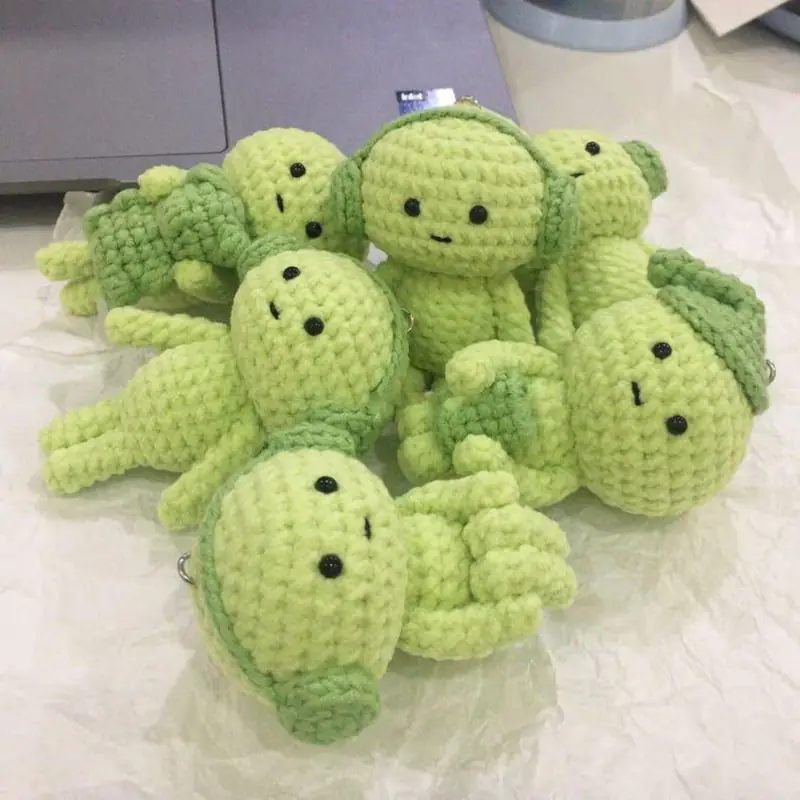
Acrylic is forgiving, cheap, and springs back — good for beginners and for toys that will be washed often. Cotton has no stretch, which shows every stitch crisply and makes shaping precise, but it is unforgiving of uneven tension and harder on the hands.
Weight is not thickness
"Worsted", "DK" and "aran" describe a range, not a measurement, and the same label varies between mills. The number that matters is on the ball band: metres per 100 g. Two worsted yarns at 180 m and 230 m per 100 g will not produce the same size toy.
Substituting safely
Work a small swatch — twenty stitches by twenty rows — in the yarn you want to use and measure it against the gauge in the pattern. If your swatch is larger, drop a hook size. This costs fifteen minutes and saves a finished piece that came out at half the intended size.
For amigurumi, go down a hook size
Ball bands recommend hooks for garments, where drape is the goal. Amigurumi needs a fabric tight enough that stuffing cannot escape through it, which usually means one or two sizes smaller than the band suggests.